

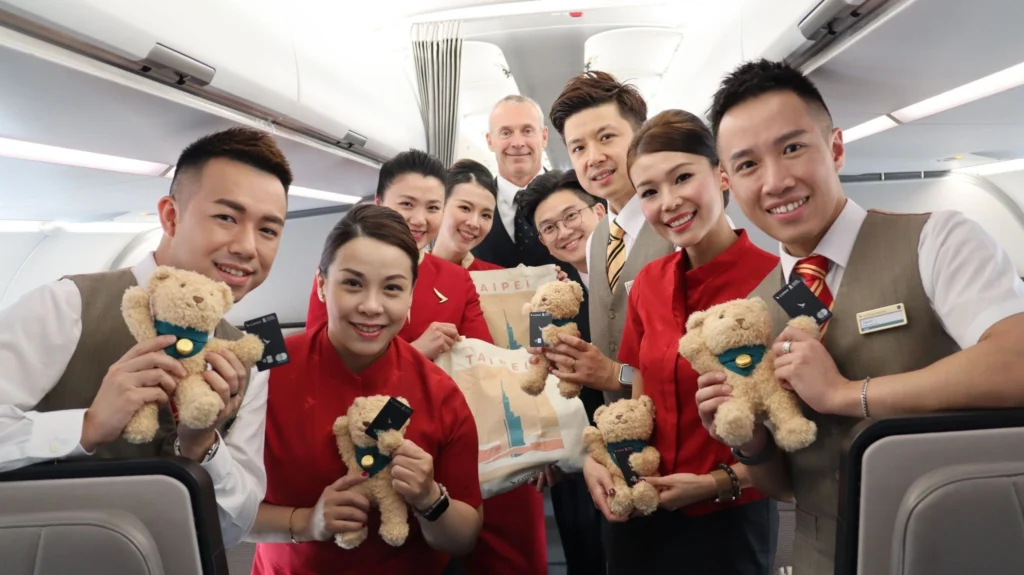
Working as cabin crew with Cathay Pacific (CX) has always carried a bit of a special aura around it. Maybe it’s the airline’s long history across Asia-Pacific skies, or the way it mixes a calm, almost understated service style with proper professionalism. Cathay Pacific offers one of the most competitive cabin crew salaries with the senior ones earning HK$30,000–HK$40,000 (US$3,855–$5,140) per month.
Either way, the crew are known for delivering a warm, polished experience that still feels genuinely human rather than overly scripted. And naturally, many people around the world look to Cathay when considering a career in international aviation.
The airline remains one of Hong Kong’s strongest symbols, even through its recent ups and downs, and the job continues to attract people who want to see the world while being part of a structured, well-run operation.
Salaries and allowances have also been steadily readjusted through the years, making the role more competitive again, especially once you tally up all the flight pay and layover incentives that add up month after month. Below is a detailed look at exactly what cabin crew earn in 2025, plus what benefits, requirements and daily realities you can expect if you’re thinking of joining the airline.

Cathay Pacific Cabin Crew Salary in 2025
Cathay Pacific cabin crew compensation can look a bit modest at first glance if you only consider the basic figure, but the real story unfolds when you look at the full package. Much of the monthly income comes from flying hours, allowances and overnight per-diem payments, especially on long-haul sectors. The more you fly, the more substantial your income climbs.
Basic Salary
The base pay for an entry-level Flight Attendant in 2025 sits around HK$9,000–HK$10,000 (US$1,157–$1,285) per month. This is the guaranteed monthly amount, even during a quieter roster period. It’s the fixed foundation of earnings, but definitely not the final number.
Flying Pay
Flying hours form the biggest chunk of income. Cabin crew receive roughly HK$65–HK$75 ((US$8.35–$9.64) per block hour, and with a typical roster falling somewhere around 70–90 hours a month, the flying pay often reaches the HK$5,000–HK$6,500 (US$643-$835) range, though busy months can tip even higher. Long-haul rosters especially tend to boost this part of the income.
Allowances and Per-Diems
Cathay Pacific crews earn layover allowances every time they operate into different cities. Rates vary depending on destination, but long-haul layovers such as London, New York, Los Angeles or Frankfurt usually offer higher payments, sometimes reaching HK$1,200–HK$1,800 (US$154–$231) for the full stay. When combined with several international sectors in a single month, allowances can easily build up to another HK$4,000–HK$6,000 (US$514–$771).
Total Monthly Earnings
When combining basic pay, flying hours, and allowances, most junior crew typically earn around HK$18,000–HK$22,000 (US$2,313–$2,827) per month, although some months, especially those with more long-haul flying, can push the total above HK$24,000 (US$3,084). Senior crew, of course, can earn quite a bit more depending on rank and bidding choices.
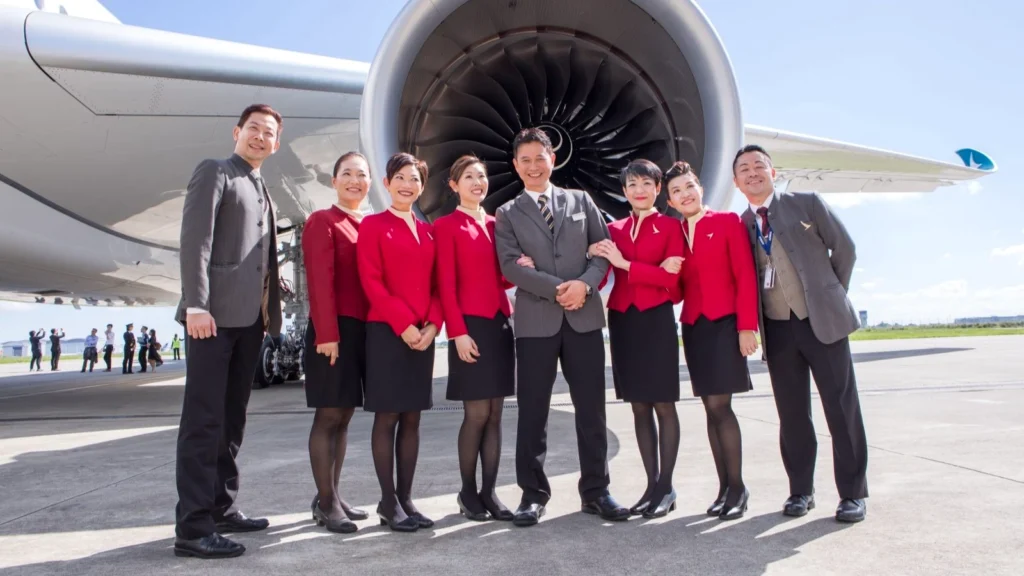
Cathay Pacific Senior Cabin Crew & Purser Salary
As you move up the ranks, salaries become significantly more stable and higher due to increased responsibilities and better increments.
Senior Cabin Crew
Senior crew usually earn around HK$22,000–HK$28,000 (US$2,827–$3,598) per month, depending on roster patterns and length of service. Their higher hourly rate and larger per-diem portions also influence the final figure. They take on added duties in the cabin but still maintain a hands-on service role, guiding junior crew and supporting pursers.
Flight Purser
Pursers, who act almost like the cabin managers on board, see monthly earnings in the HK$30,000–HK$40,000 (US$3,855–$5,140) range. Their responsibilities extend to crew briefings, passenger service oversight, safety coordination and overall cabin performance. Frequent long-haul rosters often push their monthly pay slips upwards from time to time.

Benefits of Working as Cathay Pacific Cabin Crew
1. Travel Privileges
- Cabin crew receive discounted and standby travel benefits that allow them and eligible family members to explore destinations across the network at reduced cost.
2. Medical and Insurance Coverage
- The airline supports health, dental and emergency insurance to ensure cabin crew stay protected during both duty and personal time.
3. Retirement and Financial Benefits
- Employees receive mandatory provident fund contributions, steady annual increments and occasional company performance bonuses that help build long-term financial security.
4. Lifestyle and Work Environment Perks
- Cabin crew enjoy access to various partner discounts, quality layover hotels and training programmes that support career development and overall wellbeing.

Cathay Pacific Cabin Crew Requirements
To apply for cabin crew, Cathay Pacific expects candidates to meet a certain set of standards. The criteria aren’t overly difficult, but the airline does emphasize professionalism and communication skills.
- Minimum age of 18.
- Good command of English; Cantonese or Mandarin is a strong advantage.
- Minimum secondary school education or equivalent.
- Height sufficient to reach safety equipment (usually around 208 cm arm reach).
- Physically fit, with good grooming and presentation.
- Ability to pass background verification and medical checks.
- Strong customer-service instincts and calmness in stressful situations.
Cathay Pacific Cabin Crew Hiring Process
The hiring process for cabin crew at Cathay Pacific tends to be structured yet fairly friendly, designed to see how well candidates interact, communicate, and adapt under pressure. Things usually begin with an online application, where you submit your personal details, employment history and photos. If your profile matches what they’re looking for, the recruitment team invites you for an in-person assessment day in Hong Kong or an overseas location, depending on where they’re hiring.
The assessment day normally starts with document checks to verify eligibility, followed by a height and reach test. Once cleared, candidates move into group activities that focus on teamwork, communication and problem-solving. These exercises often involve handling pretend customer scenarios, discussing solutions, or completing small tasks as a team. Recruiters carefully observe how polite, cooperative and adaptable you are, since these traits matter deeply in the cabin environment.
Shortlisted applicants usually proceed to an English test or a communication assessment. Since crew often deal with passengers from everywhere, being clear, calm and articulate is extremely important. After that comes the one-to-one interview with a recruitment officer. This is the part where you’ll talk about your motivation, your understanding of the job, and past experiences dealing with tough customers or stressful moments.
If the interview goes well, the final step includes a medical check, background screening and administrative confirmations. Once everything is complete, candidates receive their official training date. Training itself is quite intensive, lasting several weeks and covering safety, service, emergency procedures, aircraft types and grooming standards. Passing this phase is crucial, and once completed, the new crew officially join the line.

FAQs
Cathay Pacific offers one of the most competitive cabin crew salaries with the senior ones earning HK$30,000–HK$40,000 (US$3,855–$5,140) per month.
Cabin crew don’t get unlimited free flights, but they receive discounted and standby travel benefits for themselves and immediate family members. These become more valuable with seniority.
Training usually lasts several weeks, covering safety, service, emergency procedures, aircraft equipment knowledge and grooming. It’s full-time and also must be passed to qualify for flying duties.
Hong Kong can feel pricey at first, especially housing, but many crew manage budgets well by sharing accommodation. Moreover, the layover allowances and flight pay help balance the cost of living.
Please join our Telegram Channel for the latest aviation updates.

1 Comment
Pingback: Air France Cabin Crew Salary in 2025 - Aero World