

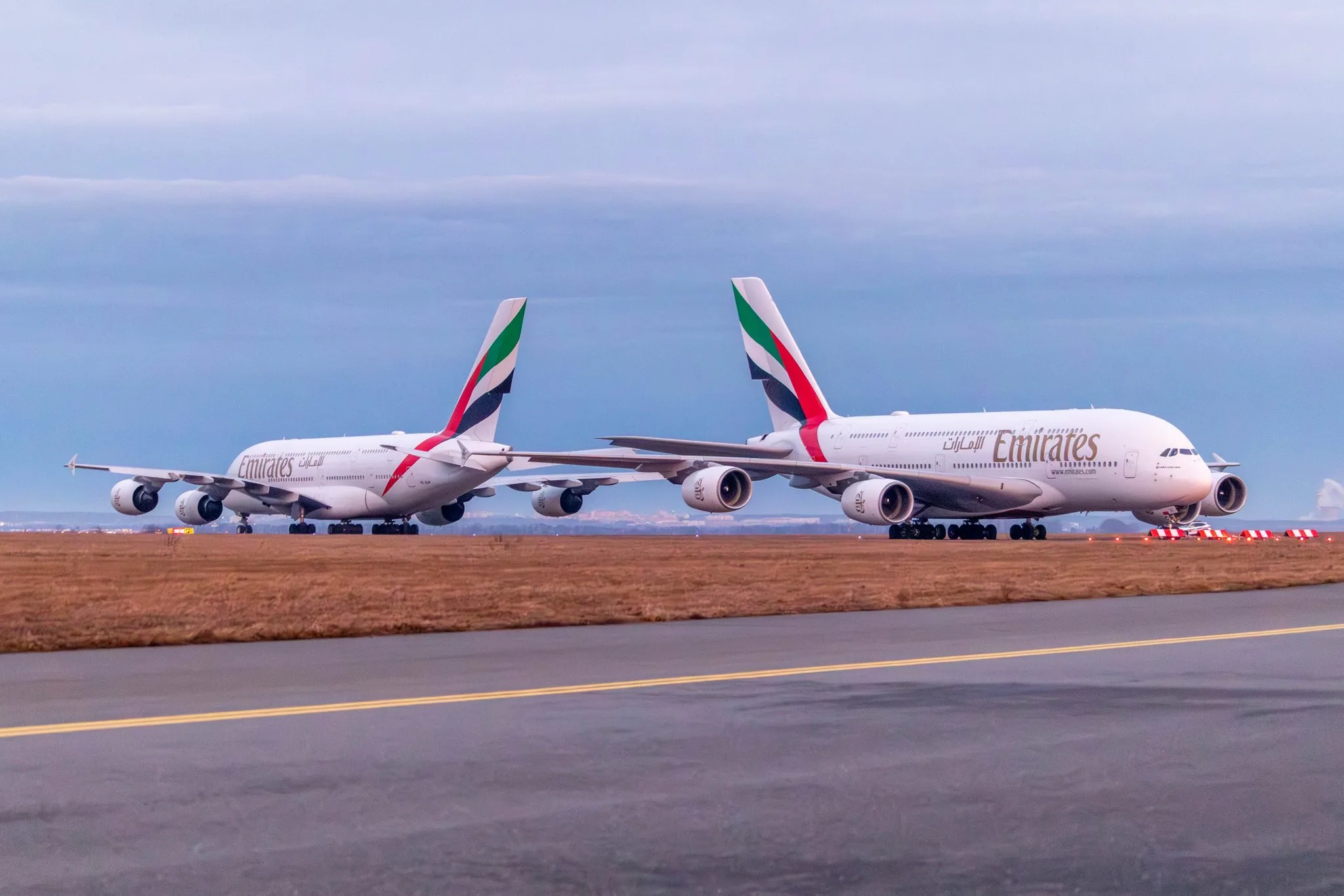
Most of Emirates’ A380 superjumbos are currently stuck at airports across the globe following the closure of UAE airspace and the suspension of operations at Dubai International Airport (DXB).
The disruption began in the early hours of Sunday, March 1, 2026, after debris from intercepted Iranian drones caused minor structural damage to a concourse at DXB. Four airport staff were injured. Shortly after, the UAE General Civil Aviation Authority (GCAA) closed national airspace to commercial traffic under what it described as precautionary safety measures.
For Emirates, the world’s largest operator of the Airbus A380, the impact is immediate and global. With its hub-and-spoke model centered almost entirely on Dubai, most of Emirates’ A380 superjumbos are currently stuck at airports across the globe, unable to return to base.
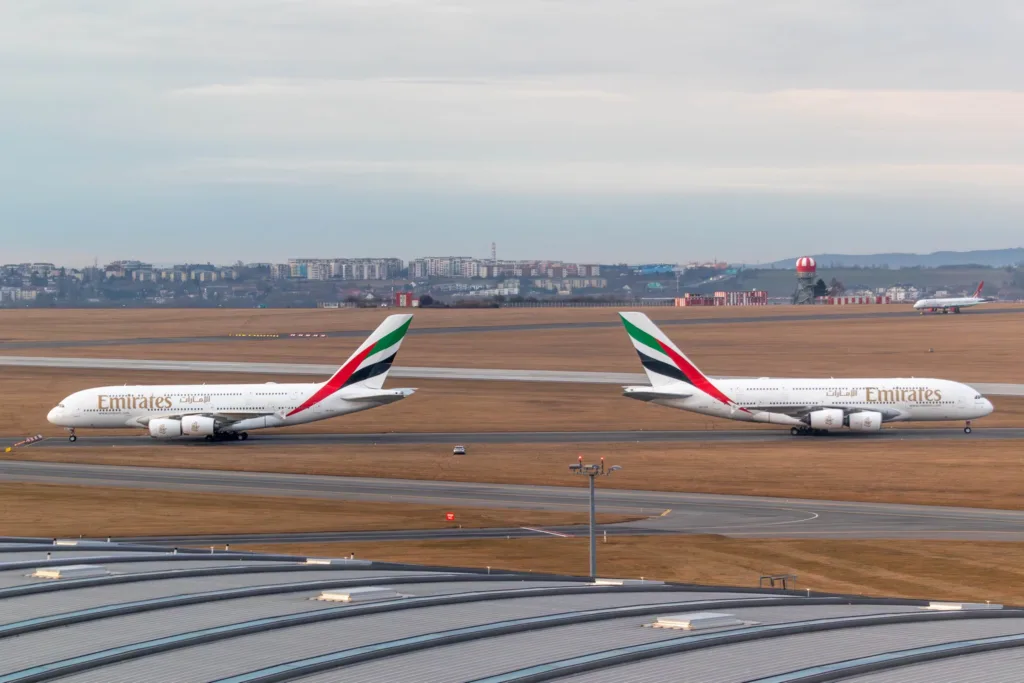
Where Are All the Emirates A380 Parked Right Now?
According to fleet-tracking data, 37 A380 aircraft remain parked at DXB. The rest are positioned across major international gateways.
Current known locations include:
- DXB – 37
- PKX (Beijing Daxing) – 4
- SYD (Sydney) – 4
- LHR (London Heathrow) – 3
- MEL (Melbourne) – 3
- AKL (Auckland) – 2
- BKK (Bangkok) – 2
- BNE (Brisbane) – 2
- CDG (Paris Charles de Gaulle) – 2
- FCO (Rome Fiumicino) – 2
- GRU (São Paulo Guarulhos) – 2
- HKG (Hong Kong) – 2
- JFK (New York JFK) – 2
- MAN (Manchester) – 2
- MNL (Manila) – 2
- MRU (Mauritius) – 2
- MUC (Munich) – 2
- MXP (Milan Malpensa) – 2
- PRG (Prague) – 2
- SIN (Singapore) – 2
- VIE (Vienna) – 2
- Multiple other airports – 1 each
These aircraft are currently parked on contact gates, remote stands, and, in some cases, taxiway holding areas, awaiting clearance to return to Dubai.
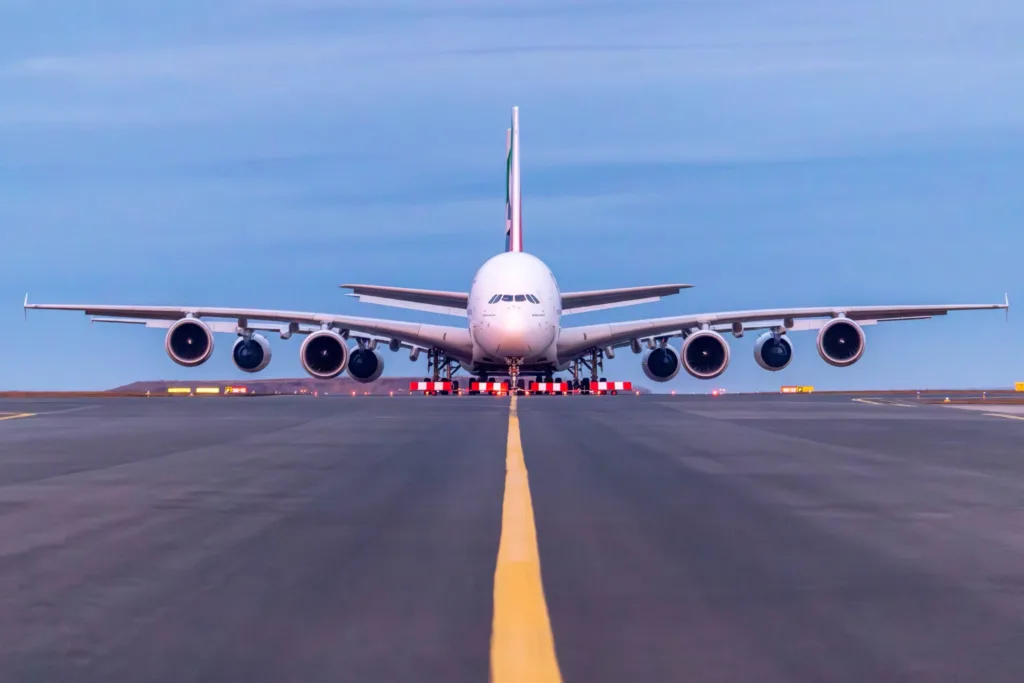
A Hub Model Under Pressure
Emirates’ long-haul network is structured around rapid connections through Dubai. Unlike multi-hub airline groups, the carrier operates almost all A380 rotations via DXB.
With Dubai airspace closed, inbound aircraft that had already departed origin airports have remained grounded at outstations. This leaves widebody aircraft, crew, and connecting passengers stranded outside the airline’s primary operational base.
Industry analysts estimate that each grounded A380 represents substantial lost revenue, given its high seat capacity and typical long-haul deployment. With nearly 100 aircraft immobilized or displaced, the operational and financial impact escalates by the hour.
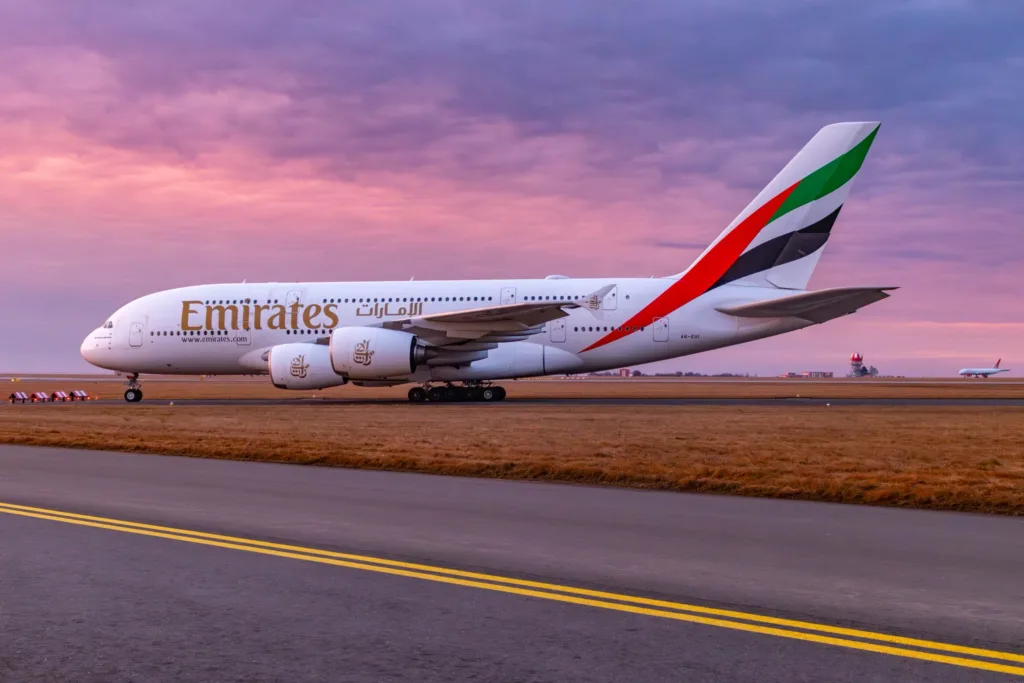
Passenger Disruption and Operational Suspension
Emirates has suspended all flights to and from Dubai until at least 3:00 PM Gulf Standard Time (GST) on Monday, March 2. The airline has stated that the resumption of operations depends on security assessments and airspace clearance.
The suspension affects tens of thousands of passengers across six continents. Aircraft rotations are disrupted, crew duty limits are being exceeded at outstations, and aircraft parking availability is tightening at several major airports.
As most of Emirates’ A380 superjumbos are currently stuck at airports across the globe, recovery planning will depend on how quickly UAE airspace reopens and whether staggered repositioning flights can be approved.
Until then, the airline’s flagship fleet normally concentrated at DXB remains dispersed worldwide, awaiting a return to its central hub.
Source: Flightradar24
